

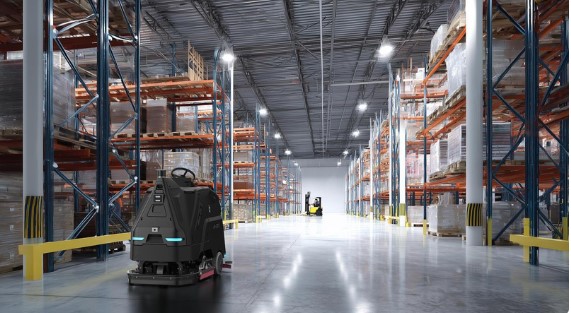
Keeping a large facility clean isn’t just about appearances—it directly impacts safety, productivity, and daily operations. That’s why more businesses are looking at the industrial floor cleaning robot as a serious alternative to traditional cleaning methods.
But is it actually worth the investment? The answer depends on your facility’s size, how often you need to clean, and what you’re currently spending on labor and maintenance. Let’s break it down.
The Reality of Cleaning Large Facilities
Warehouses, manufacturing plants, and distribution centers all share the same floor care challenge: there’s a massive amount of space that needs daily attention, and never enough people or time to handle it properly.
The most common problems include:
- Tens of thousands of square feet that need cleaning every day
- Ongoing dust, debris, and spills generated by active operations
- Limited staff available for dedicated cleaning duties
- Inconsistent results when cleaning depends on whoever’s available that shift
Even with a conventional ride-on or walk-behind scrubber, someone has to physically operate it for hours at a time. That’s a significant labor commitment—especially when cleaning isn’t your team’s primary job.
What an Industrial Floor Cleaning Robot Actually Changes
An industrial floor cleaning robot isn’t just a fancier scrubber. It’s a fundamentally different approach to floor care. Instead of assigning someone to push or drive a machine, the system takes over the task entirely. Once set up, it follows a programmed route, cleans on a consistent schedule, and adapts to its environment in real time.
Modern autonomous floor scrubber systems can:
- Navigate around pallets, machinery, and other obstacles automatically
- Adjust cleaning routes dynamically based on what’s in the way
- Operate continuously with minimal human oversight
The result: cleaning becomes a background process that runs alongside your operations instead of competing with them.
The Biggest Benefit: Labor Savings
Labor is the largest ongoing cost in facility maintenance, and it’s only getting more expensive. With traditional cleaning, someone has to operate the machine for an entire shift, new operators need training to use equipment properly, and cleaning quality varies depending on who’s running the machine that day.
An autonomous floor scrubber eliminates most of that dependency. Instead of tying up staff on cleaning, facilities can:
- Reassign workers to higher-value tasks like picking, packing, or quality control
- Reduce or eliminate the need to hire dedicated cleaning personnel
- Run consistent, unsupervised cleaning cycles day or night
For facilities that need daily or continuous cleaning, the labor savings alone can justify the investment within the first couple of years.
Consistency You Can’t Get From Manual Cleaning
Inconsistency is one of the biggest hidden costs of manual floor care. Even experienced operators miss spots, skip areas when they’re rushed, or clean at different speeds depending on the day. Over time, that inconsistency leads to buildup, safety issues, and failed inspections.
A robotic floor scrubber solves this by:
- Following the same optimized route every single time
- Maintaining consistent speed and coverage across the entire floor
- Eliminating the human variables that cause missed areas
More advanced systems actually improve over time, learning more efficient routes and reducing redundant passes to maximize coverage per hour.
Continuous Operation Without Downtime
In large facilities, cleaning often gets pushed to off-hours—or it simply doesn’t happen at all. Autonomous cleaning changes that equation completely.
Today’s automatic floor scrubber machines can run extended cycles—including overnight—without an operator present. When water runs low or the battery needs charging, the machine returns to a docking station on its own, services itself, and resumes cleaning automatically.
This kind of around-the-clock capability lets facilities:
- Keep floors clean without disrupting daytime operations
- Eliminate the need for overnight cleaning crews
- Prevent debris buildup before it becomes a bigger problem
Built for Industrial Environments
Large facilities aren’t gentle environments. Between heavy debris, high-traffic zones, and transitions like ramps and dock plates, standard cleaning equipment often struggles to keep up.
Modern industrial floor cleaning robots are engineered specifically for these conditions:
- Cylindrical brush systems that sweep and scrub in a single pass, eliminating the need for a separate pre-sweep
- High-traction drive systems that handle ramps, inclines, and uneven floor transitions without losing performance
- Durable construction designed to hold up in demanding warehouse and manufacturing environments
This isn’t consumer-grade equipment repurposed for industrial use. These machines are built from the ground up for the conditions your facility throws at them every day.
What About the Cost?
There’s no getting around it—an autonomous floor scrubber for warehouses costs more upfront than a conventional scrubber. But looking at purchase price alone is a mistake.
The real comparison requires factoring in:
- Ongoing labor costs for operators across every shift
- Cleaning consistency and the cost of inconsistency (safety incidents, failed audits, rework)
- Equipment downtime and maintenance frequency
- Productivity gains from reallocating cleaning staff to core operations
When you stack up the total cost of ownership, the math often favors autonomy—especially in larger facilities. Some systems also avoid recurring software or subscription fees, so you own the full capability without ongoing licensing costs.
When It Makes Sense—and When It Doesn’t
An industrial floor cleaning robot is worth it when:
- You operate a large facility that requires daily or continuous floor care
- Labor is constrained, expensive, or both
- Cleaning consistency is critical for safety or compliance
- You want to automate a repetitive task and free up your workforce
It may not be necessary when:
- Your facility is small enough that a walk-behind scrubber handles the job
- Cleaning is periodic rather than ongoing
- You already have dedicated, reliable maintenance staff in place
The Bottom Line
For large facilities, autonomous floor cleaning isn’t a trend—it’s a practical solution to real operational problems. The right robotic floor scrubber delivers lower labor costs, better consistency, and cleaner floors without pulling your team away from their actual jobs.
If you’re evaluating whether it makes sense for your operation, the best starting point is an honest look at what you’re currently spending on labor, how consistent your cleaning results actually are, and whether your team’s time could be better spent elsewhere.